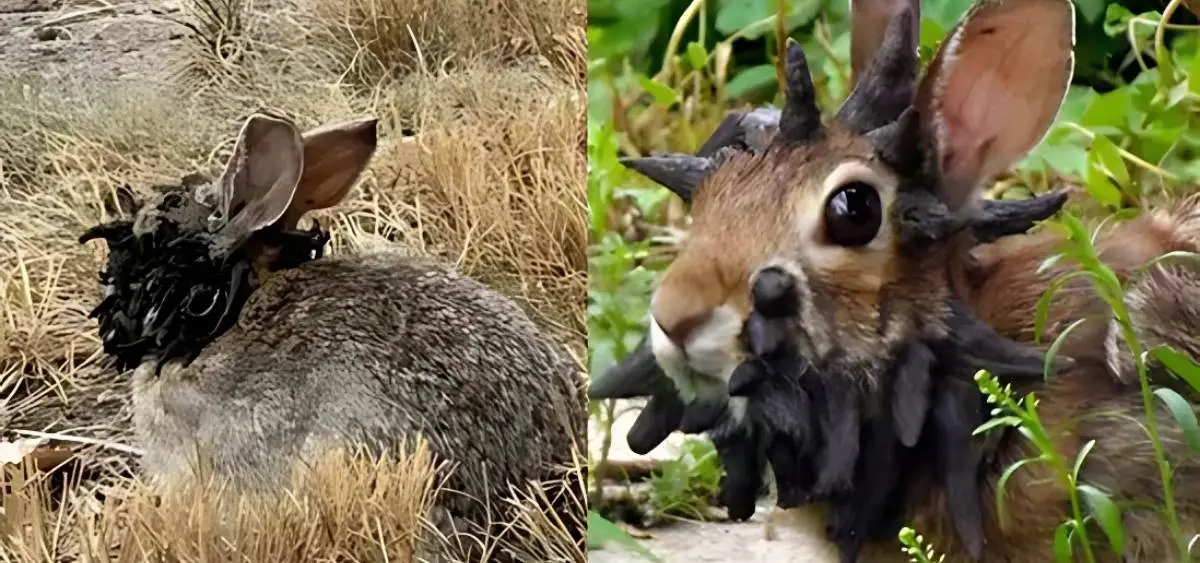
In the quiet neighborhoods of Fort Collins, Colorado, something strange is hopping around. Local residents have spotted Colorado horned rabbits with eerie, tentacle-like growths sprouting from their faces, earning them spooky nicknames like Frankenstein bunnies Colorado, zombie rabbits, and demon rabbits. These bizarre sightings have sparked curiosity, fear, and even whispers of the legendary jackalope myth Colorado. But what’s really going on with these peculiar creatures? Let’s dive into the truth behind the Fort Collins rabbit virus.
A Viral Mystery Unraveled
The strange growths on these cottontail rabbit papillomavirus cases are caused by the Shope papilloma virus (SPV), a wildlife virus Colorado that affects wild rabbits. According to Colorado Parks and Wildlife (CPW), this virus spreads through biting insects like fleas and ticks, making it a tick-borne rabbit virus or insect-spread papillomavirus. The virus causes rabbit wart-like tumors that can look like black quills rabbit face or horn-like protrusions, especially in the summer when insect activity peaks.
Residents like Susan Mansfield have described seeing rabbits with “black spines or toothpicks” around their mouths, while others noted a “scabby growth” covering their faces. These viral wildlife images go viral as people share photos online, fueling fascination and a bit of horror. But CPW assures the public that this virus not harmful humans or pets, though caution is advised when encountering these animals.
Myth Meets Reality: The Jackalope Connection
The sight of Colorado horned rabbits might remind some of the jackalope myth Colorado, a folklore tale about a rabbit with antlers or horns. This virus inspired folklore may have roots in sightings of rabbits infected with SPV centuries ago. Named after Dr. Richard E. Shope, who studied the virus in the 1930s, SPV even helped scientists understand connections between viruses and cancer, like the human papillomavirus. Today, the myth meets reality jackalope as these infected rabbits bring an old legend to life in Fort Collins.
Are These Rabbits in Danger?
Despite their frightening appearance, most rabbits with SPV remain healthy. The wild rabbit health Colorado is generally unaffected unless the growths block their eyes or mouths, making it hard to eat or drink. In most cases, the rabbit’s immune system fights off the virus, and the growths disappear over time. CPW advises against euthanizing these rabbits, as the virus is typically benign. However, they recommend keeping domestic rabbits indoors to avoid exposure to infected insects or wild rabbits.
What Should You Do If You Spot One?
If you see a rabbit with tentacle-like growths rabbits in Fort Collins, CPW offers clear wildlife safety advice rabbit virus. First, don’t touch or approach the rabbit to avoid stressing it. The virus can spread between rabbits but poses no risk to humans, dogs, or other animals. If you find a dead rabbit, you can safely handle it with gloves for disposal. If the rabbit seems unable to eat, drink, or move properly, contact local wildlife officials for guidance, but avoid attempting to treat the animal yourself.
A Strange Sight, But No Cause for Alarm
The Fort Collins rabbit virus has turned ordinary cottontails into something out of a sci-fi movie, but there’s no need to panic. These Frankenstein bunnies in Colorado are simply battling a common summertime virus. As CPW’s Kara Van Hoose explains, the handful of reported sightings likely involve the same group of infected rabbits, amplified by social media buzz. So, next time you spot a rabbit with black quills rabbit face, remember: it’s not a monster, just a cottontail dealing with a quirky Shope papilloma virus (SPV).
For now, Fort Collins residents can marvel at this strange twist of nature, where myth meets reality jackalope, and keep their distance to let these unique creatures hop on.
Also, read: Why We’ll Never Stop Howling: Importance of International Wolf Day!
Also, read: Is Your Pet’s Carbon Footprint Bigger Than You Think?
Also, read: What Are the Best Sustainable alternatives of Leather?
Also, read: A Guide on Types of Tigers: Find Your Favorite!
Also, read: Yellowstone park Animals Leaving? Experts Debunk the Rumors!