Imagine this, heavy rain hits a busy city. The streets fill with water. Cars get stuck. Emergency teams rush to help. But what if the city could actually absorb all that water? What if buildings, parks and roads worked together to soak up the rain like a sponge? That is the idea of a Sponge City. These modern cities don’t just handle storms, they use the rain to stay safe and calm. They turn a messy flood into something manageable, one drop at a time.
As climate change brings stronger and more frequent storms, cities are struggling more than ever with flooding. More than 700 million people now live in areas hit by heavy rainfall. Traditional city designs, with too much concrete and fast drains, make the problem worse. Water flows quickly off roofs and roads, floods the drains, and enters homes. The Sponge City concept changes this by letting nature take the lead. It uses green spaces, smart design, and natural systems to store and absorb rainwater safely.
What Is a Sponge City?
A Sponge City is a city that can soak up at least 70% of the rain that falls on it. Instead of letting water flood the streets, the city stores the rain, cleans it, and releases it slowly when needed. The idea started in 2013 by landscape architect Kongjian Yu. He introduced it to help solve China’s water problems. Out of 654 cities in China, 641 face flooding, while others are sinking because too much groundwater is used.
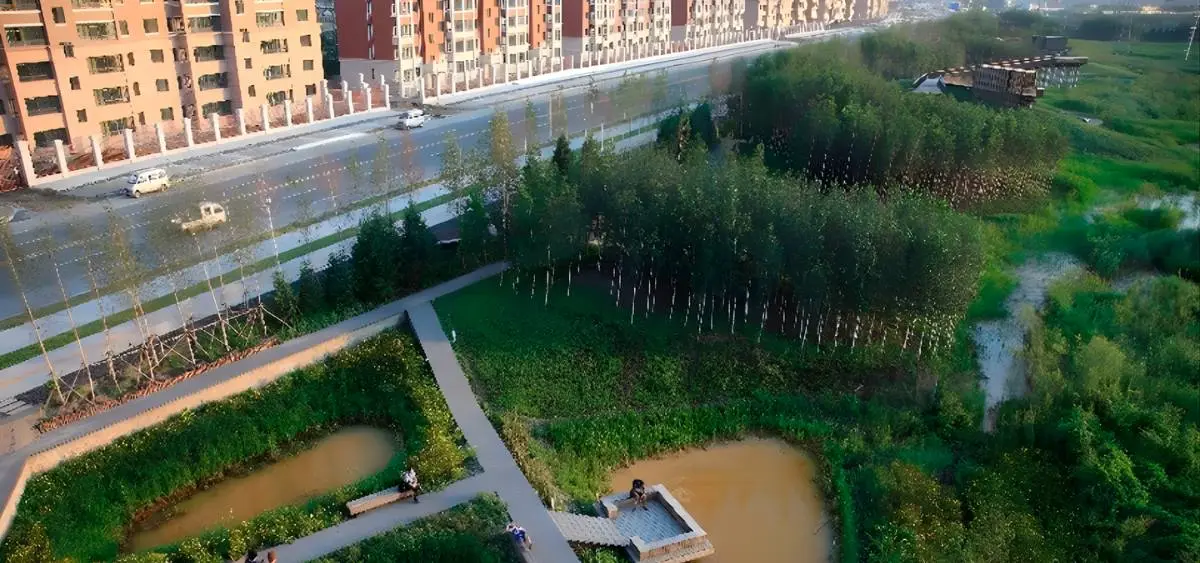
To fix this, cities use the Sponge City model to become flood-resistant. They add green features like permeable pavements, rain gardens, and small wetlands. These features copy how nature handles water:
Rain falls → The ground absorbs it → Plants clean it.
This means less dirty water running into drains and rivers. Instead, the city can reuse the water for gardening, flushing toilets, or even drinking (after treatment).
How Does Sponge City Design Work?
A Sponge City works in a very different way from old city designs. Instead of using big pipes and pumps that waste a lot of energy, it uses nature to manage rainwater. The idea is to let the city absorb, store and release water slowly, just like a sponge.
First, hard surfaces like asphalt are replaced with materials that let water pass through them. This helps rainwater soak into the ground. Streets also have bioswales, small green ditches filled with plants, that catch extra water, slow it down and clean it naturally. Green roofs and plant-covered walls add more space to hold rain and also help cool down the city.
There is smart technology too. Big underground tanks store extra rainwater for dry days. Sensors watch water levels and automatically control where the water should go. This mix of simple greenery and smart tech makes stormwater management smooth and efficient.
China started the Sponge City movement with 30 pilot cities. Beijing spent billions building green areas, trenches and water storage pits. The results were impressive, cities like Sanya and Haikou handled heavy rains much better and had less damage compared to storms in 2012. Studies show that nature-based solutions reduce flood risk, improve ecosystems, work 28% better, and cost half as much as traditional man-made systems.
Why Sponge Cities Are a Smart Solution to Urban Flooding?
Floods don’t just make your clothes wet, they disturb lives. They force people to leave their homes, damage the economy and drain important resources. For example, in 2016, one heavy flood in Nairobi covered streets with water and destroyed many livelihoods. Sponge Cities help prevent this by managing rainwater in a smarter, safer way.
One big benefit is water retention. These cities are designed to hold and absorb rainwater just like a sponge. Auckland in New Zealand has about 35% of its land covered with green or water areas, which makes it highly “spongy.” This helped the city face the huge floods in 2023. The damage still cost almost $2 billion, but the impact could have been far worse without these natural buffers.
Berlin also improved its city design after sudden floods in 2017. Now, new buildings must include sponge-like features. The city even uses groundwater directly for tap water, reducing the need for long pipelines.
The advantages don’t stop there. Sponge Cities also help clean the air, potentially saving lives, more than 8 million people die from pollution each year. Green areas also improve mental and physical health. And in dry, sinking cities like Jakarta, stored rainwater helps keep water supplies steady. During the 2020 floods, Jakarta saw around 60 deaths and 170,000 displaced people, showing how badly such cities need better water storage. Sponge Cities offer a simple idea with powerful results: less flooding, cleaner air, healthier people, and safer cities.
Sponge Cities in Action
China is leading the way and the Sponge City idea is spreading quickly. In Shanghai, Starry Sky Park turns flood-prone areas into fun public spaces that reduce land sinking and store more rainwater. Around the world, New York is just as “spongy” as Mumbai and Singapore at 30%, thanks to its restored rivers and small green parks.
Europe is joining in too. Milan’s “Sponge Metropolis” project adds 90 green improvements, plants 2,000 new trees and saves 126,000 kWh of energy every year. Rotterdam is giving more space back to rivers, and Copenhagen has a 20-year plan to collect rainwater in special basins for future use. Even Bangkok’s Benjakitti Forest Park shows how tropical cities can adapt to heavy rain.
All these examples prove one thing, eco-friendly city design really works. It makes rainwater harvesting a natural part of daily life and shows that climate-smart cities are not only possible, they’re actually pretty cool.
Building Climate-Ready Cities for Tomorrow
In the future, smart and eco-friendly cities will grow even faster with the help of Sponge City ideas. New AI tools can study soil and green areas much quicker, helping planners decide where to plant trees or create green spaces. Imagine drones planting forests around Tirana, Albania or tree-filled barriers protecting Freetown from landslides.
There are still challenges. The starting cost is high and some upgrades may not hold up during very big storms. But moving from hard concrete to more green and blue spaces is worth it in the long run. As sea levels rise and heavy rains become more common, these cities stay strong, they absorb water and help the environment.
So next time it rains, think big. Your city could become one too. A Sponge City isn’t a faraway dream, it’s the future, built one smart step at a time. What do you think, ready to go sponge mode?
FAQs
1. What is a Sponge City?
A Sponge City is a city designed to absorb, store, and reuse rainwater, just like a sponge. It helps reduce flooding and improves water management.
2. Why are Sponge Cities important?
They reduce urban floods, save water, improve greenery, lower pollution, and help cities handle climate change.
3. How does a Sponge City work?
It uses green roofs, permeable pavements, parks, wetlands, and smart water systems to soak up and store rainwater naturally.
4. Where did the Sponge City idea start?
The concept became popular in China, but now many countries use it to fight flooding and build climate-ready cities.
5. What are the main features of a Sponge City?
Permeable roads, green roofs, rain gardens, wetlands, water storage tanks, and natural drainage systems.
6. Is building a Sponge City expensive?
The initial cost is high, but it saves money in the long run by preventing flood damage and improving water supply.
7. Can older cities be changed into Sponge Cities?
Yes, but slowly. Existing cities can add green spaces, permeable streets, and rainwater systems step-by-step.
Also, read: The Dark Truth of Animal Cruelty Behind Factory Farming!
Also, read: The Incredible Benefits of Gardening for Just One Hour a Day
Also, read: Global Warming: What It Is and Why You Should Care Today
Also, read: The Glitter That Costs Childhoods: Dark Truth of Mica Mining
Also, read: How Lohum Is Making Millions from Waste Batteries!
Also, read: The Shocking Benefits of Repurposing You Never Knew About!