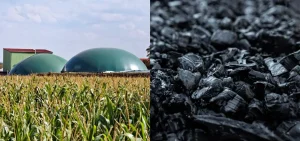

Every time you use a shimmering makeup product or glance at the glossy finish on a car, there’s a chance that sparkle comes from mica. But behind the beauty lies a troubling truth—one that involves child labour, illegal mining, and serious harm to the environment. In this blog, we will uncover the real story behind mica mining. You’ll learn where mica comes from, how it’s mined, the impact on children and nature, and what steps are being taken toward ethical sourcing. If you care about ethical consumption and want to understand how your everyday products might be part of the problem, keep reading the full blog below.
Also, read: The Power of “Reduce, Reuse, Recycle”: Making Every Resource Count
What Is Mica?
Mica is a naturally occurring mineral known for its shiny, flaky texture. It is widely used in various industries. You can find mica in cosmetics like eyeshadow, foundation, and highlighter. It is also used in car paints, electronics, insulation materials, and even plastics. The shimmer in many everyday items comes from this glittery substance.
India is one of the world’s leading producers of mica, especially in the eastern states of Jharkhand and Bihar. The mineral is often mined in small, scattered sites, many of which are unregulated and illegal. This lack of regulation leads to multiple human rights violations, including the use of child labour.
Also, read: What Is Sustainable Technology? Easy Examples and Why It Matters
Child Labour in Mica Mining
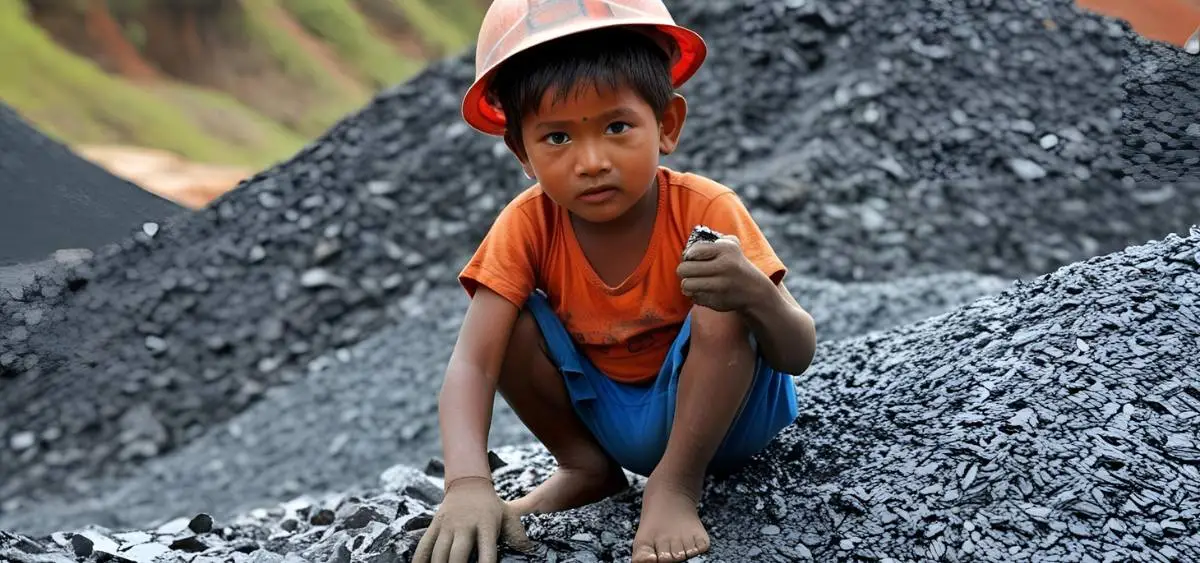
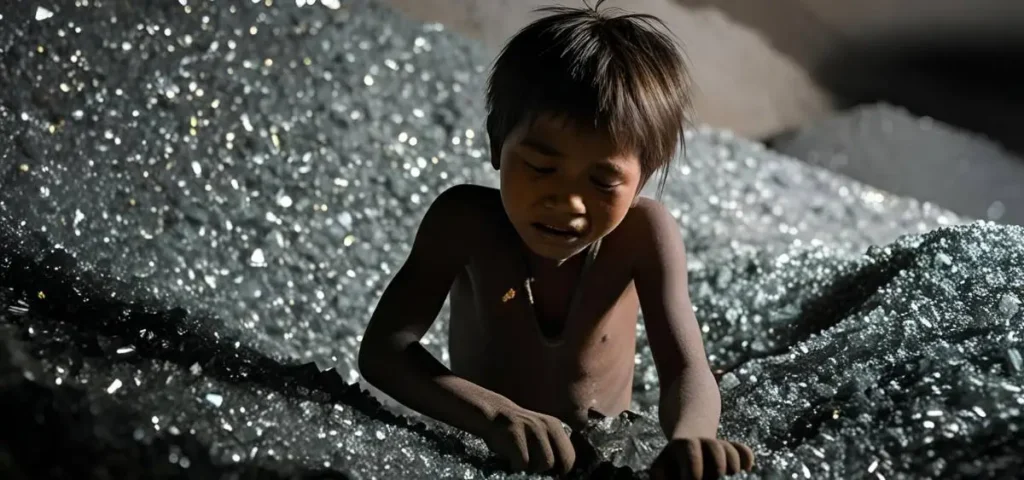
In India’s mica belt, many children work in dangerous conditions. Families, trapped in poverty, rely on children to contribute to the household income. Children as young as five descend into narrow, unstable tunnels to collect mica flakes. These tunnels can collapse at any time, putting their lives at risk.
According to a 2024 report by the U.S. Department of Labor, mica mining in India continues to involve child labour, especially in areas where mines are informal or illegal. These children often miss out on education, face health issues like respiratory problems and cuts, and suffer psychological trauma from hard labour.
The Dark Side of Mica Mining
Illegal mica mining is widespread. Although mica mining was officially banned in Jharkhand in the 1980s, demand continued. As a result, illegal mines flourished. Today, many families work in abandoned mines without safety measures.
A report by the Business & Human Rights Resource Centre revealed that there are significantly more illegal mica mines than officially recorded. These operations operate without regulation, enabling worker exploitation, dangerous work conditions, and environmental degradation.
Also, read: Who Are the Green Giants? And How Are They Changing Our World?
Environmental Impact
Mica mining causes serious environmental damage. In areas like Giridih, Jharkhand, mining has led to deforestation, soil erosion, and contamination of agricultural land. A 2023 study in ScienceDirect confirmed that open-pit mica mining has polluted local ecosystems with heavy metals.
This environmental damage not only affects biodiversity but also the health and livelihood of nearby communities who depend on farming. The soil quality decreases, and clean water becomes scarce, affecting both human and animal life.
Mica in Cosmetics
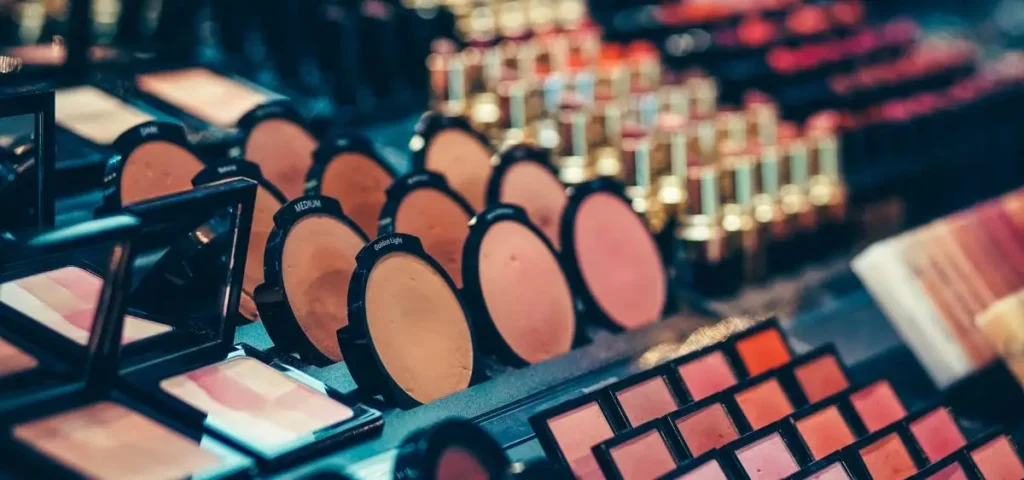
The shimmer you see in makeup often comes from mica. The beauty industry and mica are closely linked. Products like lipsticks, blushes, and even skincare often contain mica. However, the supply chain of mica is rarely transparent. Many companies cannot trace the origin of the mica they use.
This lack of transparency means that consumers might be using products connected to child exploitation and illegal mining. While some brands are beginning to take responsibility, much work remains.
Also, read: The Dead Sea Crisis Explained: Nature’s Wonder at Risk
Towards Ethical Mica Mining
Organizations such as the Responsible Mica Initiative (RMI) are working to change the system. RMI aims to create a fair, safe, and sustainable mica supply chain. This includes improving working conditions, providing education to children, and helping families find alternative incomes.
They partner with governments, local communities, and brands to raise awareness and demand ethical sourcing. Consumers can also help by choosing products from companies that support sustainable mica sourcing and openly share their supply chains.
Several documentaries and investigative reports explore the issue in depth. These films show the real faces behind mica mining and highlight the urgent need for change. Watching these can help people understand the complexity of the mica supply chain issues and motivate action.
Also, read: Zero Waste Challenge: Small Changes, Big Impact
Conclusion
Mica gives us shine, but it also hides shadows. Behind the glamour lies a harsh reality of child labour, environmental harm, and unethical practices. Understanding where mica comes from and demanding ethical standards is a vital step toward change.
By supporting ethical mica mining, advocating for transparency, and spreading awareness, we can help ensure that no child has to pay the price for a little sparkle.
Also, read: The Incredible Benefits of Gardening for Just One Hour a Day
FAQs
1. Where does most mica come from?
A large portion of the world’s mica comes from India, particularly the states of Jharkhand and Bihar, where both legal and illegal mica mining operations exist.
2. How does mica mining affect the environment?
Mica mining causes deforestation, soil erosion, and contamination of water sources. Open-pit mining can degrade entire ecosystems and harm agriculture in surrounding areas.
3. Is the mica in makeup ethically sourced?
Not always. Many beauty brands still source mica from suppliers who cannot verify whether child labour was involved. However, some companies are now committed to ethical mica sourcing and transparency in their supply chains.
4. How can consumers help reduce unethical mica mining?
Consumers can support ethical practices by buying products from brands that promote sustainable mica sourcing, checking for certifications, and demanding supply chain transparency.
5. Are there alternatives to natural mica?
Yes. Synthetic mica (also known as fluorphlogopite) is used by some brands as a more ethical alternative. It offers a similar shimmer without the human rights and environmental concerns.