You use stationery every day, your notebooks, pens, sticky notes, rulers, and all the little tools that help you stay organized. But what we often don’t realize is that many of these everyday items quietly harm the planet through plastic waste and non-recyclable materials. The good news? Making the switch to sustainable stationery is one of the simplest and most rewarding eco-friendly changes you can start right now. In today’s blog, we’ll dive into easy, practical swaps that actually work in real life and help you build a greener workspace without any extra effort.
Why Switch to Sustainable Stationery or Eco-friendly stationery?
Traditional notebooks, plastic pens, and regular office supplies harm the planet far more than most people realize. The world uses over 422 million metric tons of paper every single year, and producing just one ton of standard office paper requires around 24 trees. When you think about how many notebooks, diaries, and printer sheets we use daily, it becomes clear how quickly this adds up and how fast forests are disappearing.
Plastic pens create another big problem. They are made from chemicals that can be harmful to both the environment and human health. After use, most pens are thrown away and end up in landfills or oceans, where they can remain for hundreds of years without breaking down. This contributes to pollution, harms wildlife, and increases plastic waste across the planet.
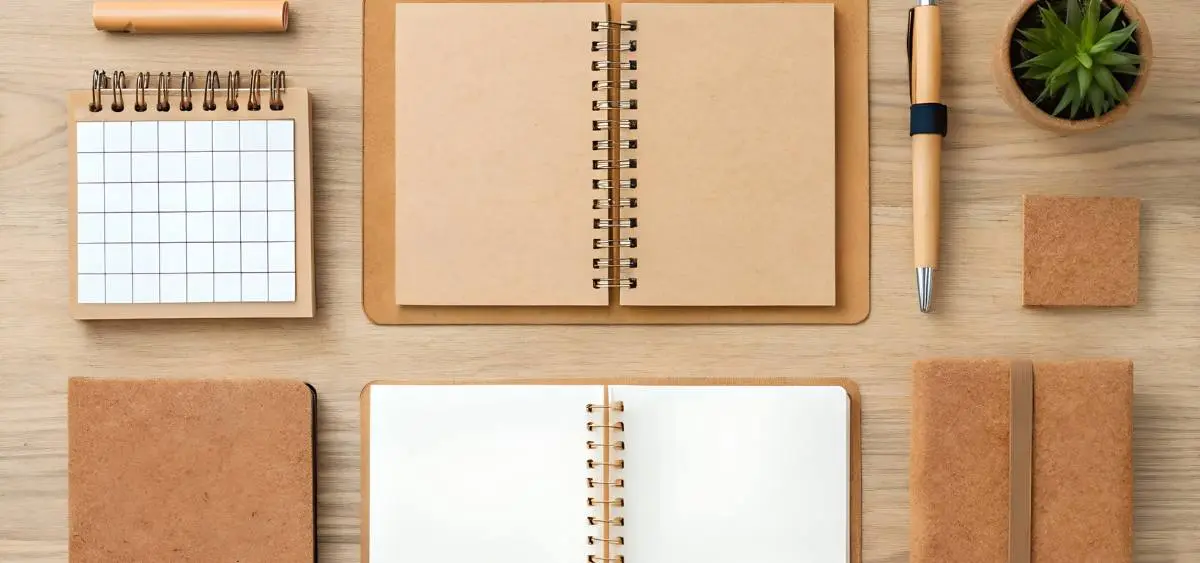
Sustainable stationery offers a smarter, greener solution. These products are made from recycled paper, plant-based materials, agro-waste, bamboo, or other renewable resources. They reduce the demand for cutting trees, lower carbon emissions, and prevent plastic from entering our environment. Many eco-friendly options are also reusable, compostable, or fully zero-waste and they work just as well (or even better) than traditional products.
Switching to sustainable stationery isn’t just a trend, it’s a small, practical step that creates a big positive impact on the environment, one notebook or pen at a time. Here are simple, practical swaps that actually work in real life.
1. Replace regular notebooks with recycled or agro-waste paper ones
Traditional notebooks come from freshly cut trees. Every ton of virgin office paper needs 24 trees. That adds up fast. Swap it for:
- 100% recycled paper products.
- Eco-friendly notebooks made from sugarcane bagasse, wheat straw, or rice husk.
- Plantable seed paper notebooks that grow into herbs or flowers when you’re done (zero-waste stationery at its best!).
- These feel just as smooth to write on, look stylish, and cut deforestation instantly.
2. Ditch single-use plastic pens forever
Plastic pens are tiny, but they’re one of the biggest stationery polluters. Most contain polystyrene, a toxic plastic that never really biodegrades. Better choices you’ll love:
- Refillable metal or bamboo pens.
- Pens made from recycled plastic or recycled water bottles.
- Compostable pens that break down naturally.
- Plantable pens with seeds in the capsule (yes, they exist!).
3. Say goodbye to regular sticky notes
Standard sticky notes are bleached, coated with chemicals, and thrown away after one use. Go for:
- Recycled content sticky notes.
- Reusable silicone sticky pads (write with a marker, wipe, reuse thousands of times).
- Digital notes on your phone or tablet when possible.
4. Choose biodegradable or wooden pencils
Most pencils still contribute to deforestation (cedar wood) and graphite mining isn’t pretty either. Sustainable alternatives:
- Pencils made from recycled newspaper or recycled paper
- Plantable pencils with seeds instead of erasers
- Mechanical pencils with refillable lead (lasts years)
5. Pick rulers, sharpeners, and erasers that don’t hurt the planet
Plastic rulers take centuries to break down. Easy swaps:
- Bamboo or recycled plastic rulers
- Metal or wooden sharpeners
- Natural rubber or biodegradable erasers
6. Go for non-toxic, water-based inks and highlighters
Traditional inks contain petroleum-based chemicals. When thrown away, they leak into soil and water. Look for:
- Vegetable-based inks
- Soy or water-based highlighters
- Markers made from recycled materials
7. Make your desk truly green with eco-friendly desk essentials
Complete the transformation:
- Reusable metal staplers (no more plastic staples)
- Paper tape instead of plastic tape
- Cork or recycled cardboard mouse pads
- FSC-certified or recycled paper for printing
8. Shop smart: avoid greenwashing
Not everything labeled “eco” actually is. Always check:
- FSC certification (responsible forestry)
- Actual recycled content percentage
- Transparent information about materials
- Minimal or recyclable packaging
9. Start small: you don’t need to replace everything today
Pick one item this week. Maybe your next notebook. Then a pen. Then sticky notes. Small swaps add up to massive impact.
10. Bonus hack: Turn old stationery into something useful
Before throwing anything away:
- Use both sides of paper
- Turn old notebooks into scrap paper
- Donate usable pens and pencils to schools
- Collect plastic pens for Terracycle-style recycling programs
Sustainable stationery isn’t more expensive anymore. Many eco-friendly notebooks, pens, and green office supplies cost the same or less than regular ones, especially when they last longer and can be refilled.
Every time you choose sustainable school supplies, reusable stationery, or plastic-free stationery, you vote for a cleaner planet. Ready to make the switch? Start with just one eco-friendly swap today. Your desk will look better, you’ll feel better, and the earth will thank you. Which sustainable stationery item will you try first? Drop it in the comments, let’s inspire each other to build greener workspaces and classrooms!
FAQs
1. What is sustainable stationery?
Sustainable stationery includes pens, notebooks, paper, and other desk items made from eco-friendly, recycled, or biodegradable materials that reduce harm to the environment.
2. Is sustainable stationery more expensive?
Not always. Some eco-friendly items cost slightly more, but many are affordable and they often last longer, making them cost-effective.
3. What materials are used in eco-friendly stationery?
Common materials include recycled paper, bamboo, cork, biodegradable plastics, plant-based inks, and FSC-certified wood.
4. Are recycled notebooks good quality?
Yes! Modern recycled notebooks are sturdy, smooth to write on, and come in many designs. They perform just like regular notebooks.
5. How can I make my desk more eco-friendly?
Choose reusable items, buy recycled products, avoid plastic-heavy stationery, and pick refillable pens and markers instead of disposable ones.
Also, read: Sustainable Fashion Hacks: Stylish Choices That Help the Earth
Also, read: These 5 Delicious Sustainable Breakfasts Will Make Your Mouth Water!
Also, read: What Are Sustainable Development Goals? Why Are They Important?
Also, read: Top 10 Sustainable Fabrics That Are Saving Our Planet!
Also, read: What Are the Best Sustainable alternatives of Leather?
Also, read: Top 5 Organic Cotton T-Shirts for Women! (Soft, Stylish & Sustainable)