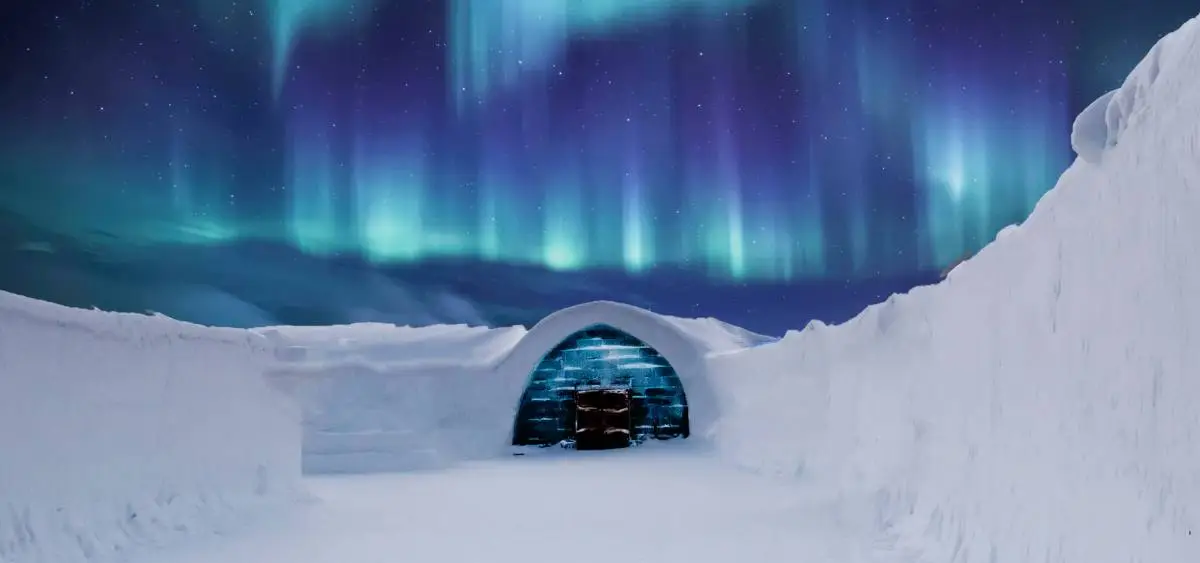

Have you ever looked up at a night sky and seen green, pink, or purple waves swirling across the horizon? If so, chances are you’ve seen an Aurora—nature’s most breathtaking light display. But what is an Aurora, and why does it happen? Let’s explore the science, wonder, and best ways to see this incredible sight.
Also, read: From Plastic to Purpose: A Thoughtful List of Sustainable Swaps
What Is an Aurora?
An Aurora is a natural light phenomenon in Earth’s atmosphere, mostly occurring in high-latitude areas near the Arctic and Antarctic circles. The phenomenon is a consequence of interactions between solar particles from the sun and atmospheric gases on our planet. When the charged particles enter the magnetic field of our planet, they bump into nitrogen and oxygen molecules, producing light that forms the spectacular visual effects that we see.
This is referred to as the Aurora Australis or Southern Lights in the Southern Hemisphere, and as the Aurora Borealis or Northern Lights in the Northern Hemisphere. Auroras appear at altitudes of between 80 and 640 kilometers above the Earth.
Also, read: Turning Storm-Damaged Wood into Music and Hope – VAIA Cube
The Science Behind Auroras: Solar Activity and Earth’s Magnetosphere
The Sun is also a key factor in the production of Auroras. At times of increased solar activity, including solar flares and coronal mass ejections (CMEs), the Sun releases bursts of charged particles called the solar wind. When these particles arrive at Earth, they collide with our planet’s magnetosphere (a magnetic shield around Earth).
This collision makes the charged particles move faster along magnetic field lines to the polar regions, where they crash with atmospheric gases and emit light that creates Auroras.
Research done recently has revealed that magnetic energy explosions, or magnetic reconnection, about a third of the way to the Moon, drive substorms that lead to sudden brightenings and quick movement of the Aurora Borealis.
Also, read: The Dead Sea Crisis Explained: Nature’s Wonder at Risk
Best Places to See Auroras
Experiencing an Aurora firsthand is a bucket-list item for many. Here are some of the best places to see Auroras:
Northern Hemisphere (Aurora Borealis)
- Tromsø, Norway: The “Gateway to the Arctic,” with frequent Aurora sightings.
- Abisko National Park, Sweden: Offers clear skies and minimal light pollution.
- Fairbanks, Alaska, USA: Under the Aurora Oval, with perfect viewing conditions.
- Yellowknife, Canada: Located directly under the Aurora Oval, providing excellent viewing opportunities.
- Reykjavik, Iceland: Blends city comforts with nearby dark-sky sites.
Southern Hemisphere (Aurora Australis)
- Tasmania, Australia: The southern end has dark skies that are perfect for observing the Southern Lights.
- South Island, New Zealand: Especially around Otago and Southland areas.
- Antarctica: Provides unobstructed views, although access is restricted to research expeditions.
The best time to view Auroras is during the winter months, from late September to late March, when nights are longest and skies are darkest.
Also, read: Greenhouse Effect: The Hidden Danger Behind Climate Change
How to See the Northern Lights: Tips for Aurora Hunting
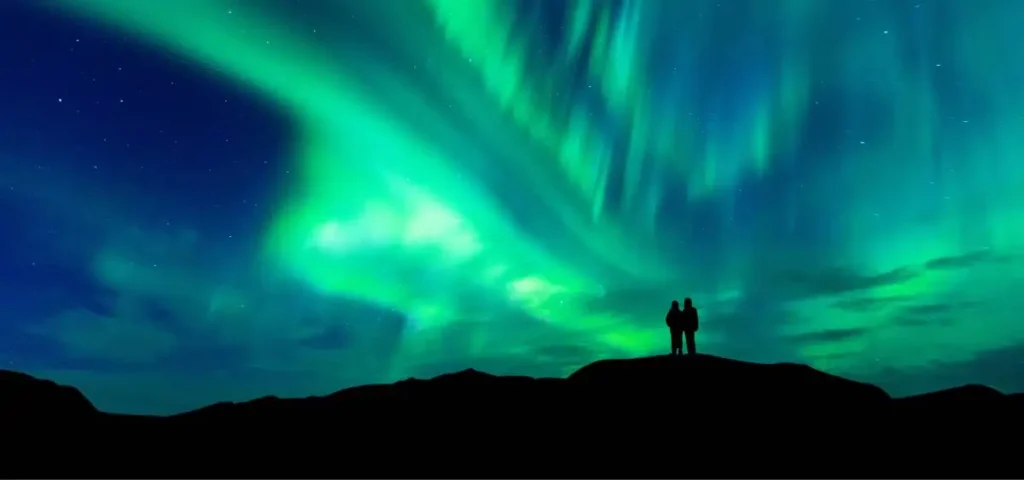
Going on an Aurora hunting trip or organizing your own expedition? Here’s how to increase your chances:
- Check the Aurora Forecast: Make use of sources such as NOAA’s Space Weather Prediction Center for live updates.
- Find Dark Skies: Look for areas remote from town lights to minimize light pollution.
- Monitor Solar Activity: Large solar activity increases the chance for Auroras.
- Be Patient and Prepared: Dress warmly, have snacks, and be prepared to wait for the lights to show up.
A powerful G3 geomagnetic storm recently enabled Auroras to be seen as far south as Oregon and Illinois, highlighting the value of keeping an eye on space weather forecasts.
Also, read: Greenhouse Gases – The Invisible Force Behind Climate Chaos
Aurora Photography Tips: Capturing the Magic
Photographing an Aurora requires specific techniques to capture its full beauty:
- Use a Tripod: Stabilizes your camera for long exposures.
- Manual Settings: Set your camera to manual mode to control exposure.
- Aperture: Use a wide aperture (e.g., f/2.8) to allow more light.
- ISO: Start with ISO 800 and adjust as needed.
- Shutter Speed: Experiment with exposures between 5 to 30 seconds.
NASA photographers recommend starting with a wide aperture to capture more light quickly, especially for fast-moving features.
Understanding Aurora Colors: What Do They Mean?
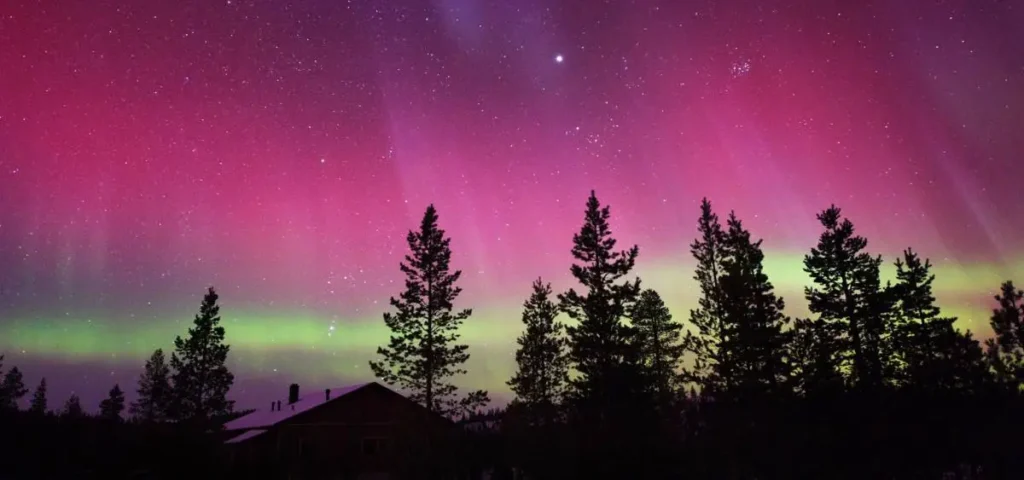
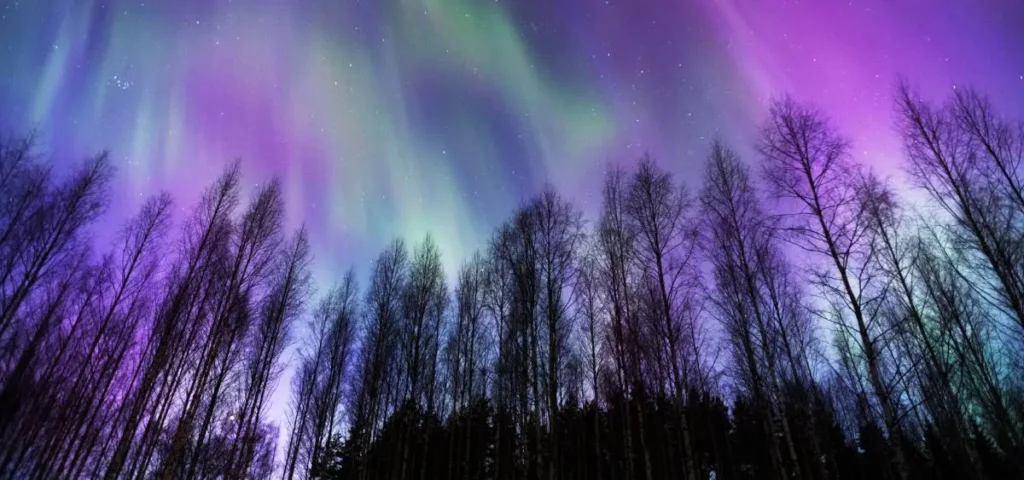
The colors observed in Auroras are determined by the type of gas molecules involved and their altitude in the atmosphere:
- Green: Produced by oxygen molecules located about 60 miles above Earth.
- Red: Caused by high-altitude oxygen, at heights of up to 200 miles.
- Blue and Purple: Result from nitrogen molecules.
Each color provides insight into the composition and behavior of Earth’s upper atmosphere during solar interactions.
Also, read: Global Warming: What It Is and Why You Should Care Today
Aurora and Space Weather: Effects on Earth
While Auroras are visually stunning, they also signify geomagnetic activity that can impact Earth:
- Satellite Operations: Increased radiation can affect satellite electronics.
- Communication Systems: High-frequency radio communications can experience disruptions.
- Power Grids: Strong geomagnetic storms have the potential to affect power transmission.
Monitoring Aurora forecasts and understanding space weather phenomena are crucial for mitigating these effects.
Historical Context: The 1859 Carrington Event, a massive solar storm, caused widespread telegraph disruptions and is a reminder of the potential impacts of intense solar activity.
Also, read: Global Warming: What It Is and Why You Should Care Today
Conclusion
Auroras are more than just a visual spectacle; they are a testament to the dynamic interactions between our planet and the Sun. Whether you’re witnessing the Aurora Borealis in the north or the Aurora Australis in the south, these natural light displays
FAQs
1. What colors can Auroras be?
The most common color is green, caused by oxygen. Red Auroras also come from oxygen but at higher altitudes. Purple, blue, and pink colors are typically from nitrogen molecules.
2. Are Auroras harmful to humans?
No, Auroras are completely harmless to humans on the ground. They occur high in the atmosphere and pose no health risks.
3. Can Auroras affect technology?
Yes, strong solar storms linked to Auroras can affect satellites, GPS systems, power grids, and radio communications, especially in polar regions.
4. What is the Aurora Oval?
The Aurora Oval is a ring-shaped zone around each magnetic pole where Auroras are most likely to occur. It expands and contracts based on solar activity. Areas under or near the oval have the best chances of viewing Auroras.
5. What is the connection between solar flares and Auroras?
Solar flares and coronal mass ejections (CMEs) send bursts of charged particles toward Earth. When these particles reach our planet and interact with the magnetosphere, they can trigger intense Auroras — sometimes even visible in lower latitudes.