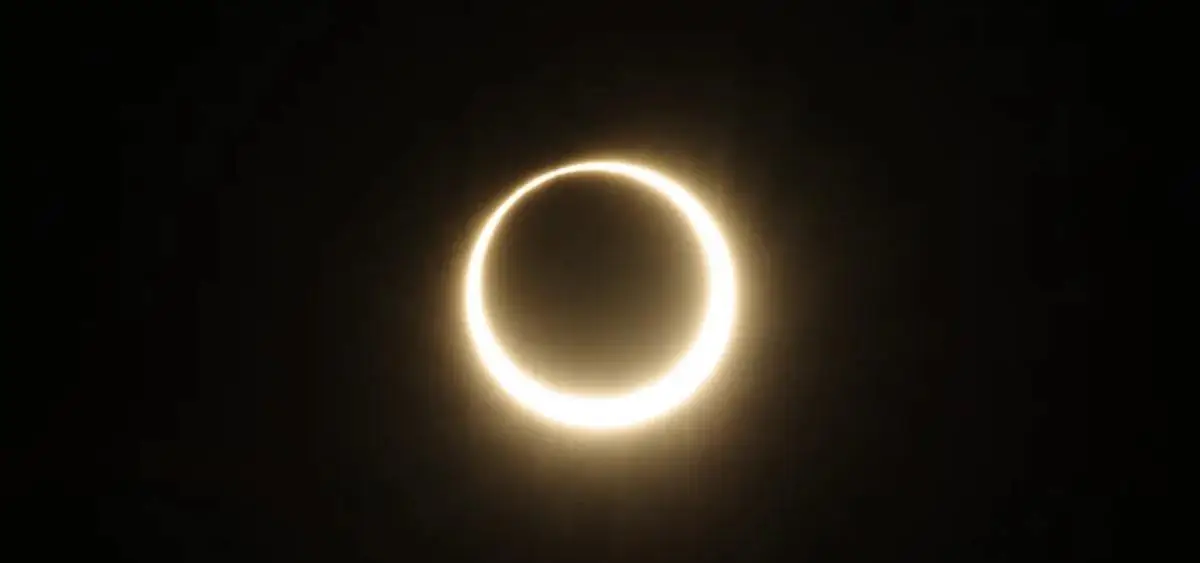

Only one week is left until the annular solar eclipse of 2026, a rare and beautiful sky event. On February 17, 2026, the moon will move between the Earth and the sun. However, the moon will be slightly farther away than usual, so it will not block the sun completely. Because of this, a bright circle of sunlight will appear around the moon. This glowing ring is known as the “ring of fire.”
The best view of this eclipse will be over Antarctica. The full annular phase will last for about 2 minutes and 20 seconds at its maximum. The eclipse path crosses very remote and icy areas, so only scientists working at research stations may be able to see it clearly. While animals like penguins may not notice anything special, researchers will be excited to study the sun during this rare moment, as part of its bright light will be blocked.
For most people around the world, including India, the full ring of fire will not be visible. However, people living in the southern parts of South America, such as Chile and Argentina, and southern Africa, including South Africa, Mozambique, and Madagascar, will be able to see a partial solar eclipse. In these areas, the moon will cover a large part of the sun, making it look like the sun has a big bite taken out of it.
The eclipse will begin at around 11:42 UTC, which is about 5:12 PM IST. It will reach its maximum at 12:13 UTC (around 5:43 PM IST) and will end later in the afternoon. Since it happens in the evening in India, people do not need to wake up early to follow the event online.
The annular solar eclipse 2026 is not just a beautiful sight. It also reminds us of the incredible power of the sun. Every day, the sun provides clean and renewable energy that we can use through solar panels. Solar energy helps reduce pollution, fight climate change, and build a more sustainable future. Events like this eclipse remind us why using the sun’s energy wisely is important for the planet.
Safety is very important during any solar eclipse. People should never look directly at the sun with naked eyes. Doing so can cause serious and permanent eye damage. Always use certified solar eclipse glasses or simple tools like a pinhole projector to watch the eclipse safely.
If you cannot see the eclipse from your location, there is no need to worry. Many space agencies and astronomy websites will live stream the annular solar eclipse 2026 online, showing clear views from Antarctica.
So, mark February 17, 2026, on your calendar. Whether you watch a partial eclipse, enjoy a live stream, or simply learn about the event, let this annular solar eclipse inspire you to respect nature and choose more sustainable ways to protect our planet for the future.
Also, read: Apple Leather: From Apple Waste to High-End Fashion!
Also, read: What Are Peatlands and Why They Matter More Than Forests?
Also, read: Wild Koala Day 2026: History, significance and fun facts!
Also, read: Rusty-Spotted Cat: Meet the World’s Smallest Wild Cat!
Also, read: How Shrimp and Rice Grow Together in One Field With Zero Waste
Also, read: What Is Regenerative Agriculture? Why It Matters Today?